
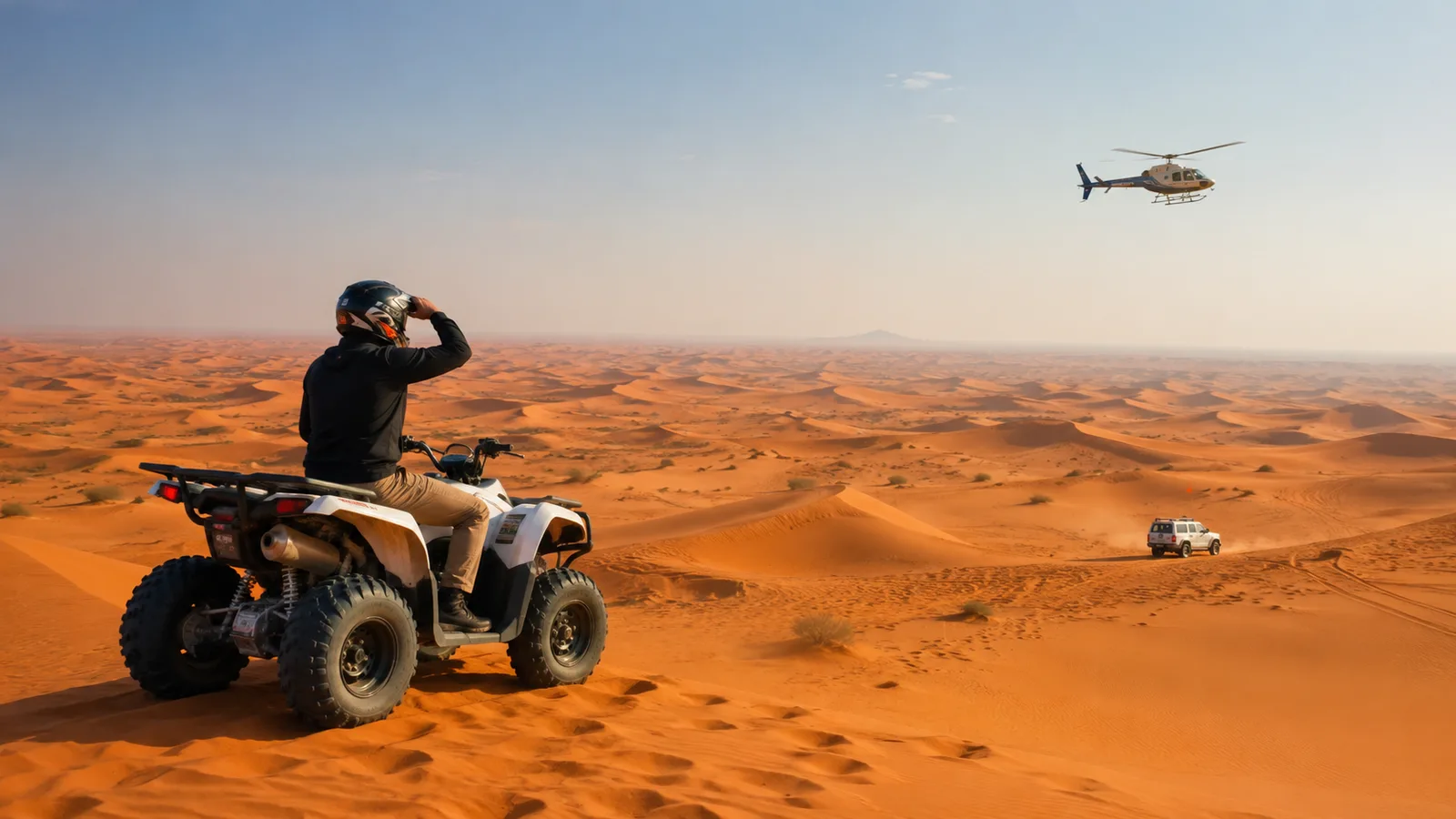
The Reality of Getting Lost During a Quad Bike Ride in the Dubai Desert
The vast Arabian Desert surrounding Dubai is one of the most visually stunning adventure landscapes in the world. Thousands of tourists explore its red dunes every year using an all terrain vehicle, commonly known as a quad bike. The experience feels thrilling, fast, and completely immersive.
However, beneath the excitement lies a serious question that many travelers ask before booking: what actually happens if you get lost during a quad bike ride in the Dubai desert?
The answer involves a combination of environmental danger, modern tracking systems, and highly advanced search and rescue operations led by authorities such as the Dubai Police Force. While the desert is safe when guided properly, getting lost without preparation can quickly turn into a survival situation.
Understanding this scenario is essential for anyone planning a desert safari, especially in remote areas like Lahbab, where dunes stretch endlessly in every direction.
Why Getting Lost in the Dubai Desert Is a Real Risk
Even though quad bike tours are professionally organized, the desert environment itself creates natural risks. The dune systems in Dubai are constantly shifting due to wind patterns, especially across open regions of the Arabian Desert.
Unlike urban environments, there are no fixed roads or permanent visual markers. A rider can easily become disoriented if they move away from the main group or ignore guide instructions. High speed riding, sand glare, and repetitive dune patterns can create a false sense of direction.
In most cases, tourists do not realize they are off route until visibility or terrain recognition becomes difficult. At this stage, the situation begins transitioning from a recreational ride into a survival scenario that requires immediate attention.
What Happens Immediately After You Get Lost in the Desert
When a quad bike rider becomes separated from the group, the first few minutes are critical. The desert does not provide natural shelter, and temperatures can rise rapidly depending on the time of day.
The most immediate risk is disorientation. Without landmarks, riders may continue moving in circles without realizing it. In addition, dehydration begins faster than most people expect, especially under direct sunlight.
Tour operators typically monitor groups using GPS tracking systems and communication devices. When a rider is missing, guides initiate internal checks and attempt radio communication. If contact fails, the situation escalates to a formal alert.
At this stage, professional tour operators coordinate with local rescue authorities to begin locating the missing rider.
How Dubai Search and Rescue Teams Respond
The UAE has one of the most advanced desert rescue infrastructures in the world. Once a missing quad bike rider is reported, the Dubai Police Force activates its search and rescue units.
These operations are highly structured and often involve multiple layers of technology. Helicopters equipped with thermal imaging cameras are deployed to scan large desert areas. Ground patrol units navigate dune systems using GPS coordinates, while command centers analyze last known locations.
The response is especially efficient in popular safari zones such as Lahbab, where operational patterns and common routes are well understood by rescue teams.
In many cases, rescue teams can locate individuals within a short time due to the combination of tracking systems and rapid deployment capabilities.
The Role of GPS and Tracking Systems in Locating Riders
Modern desert safari operations rely heavily on the Global Positioning System (GPS). Most quad bikes used in commercial tours are equipped with tracking devices that continuously transmit location data to the tour operator.
This allows guides to identify when a rider deviates from the group path. In many cases, alerts are triggered automatically if a vehicle stops moving for too long or moves outside designated safe zones.
GPS technology significantly reduces the risk of prolonged exposure in the desert. However, it is not always flawless. Signal interference, device damage, or user error can still create gaps in tracking.
This is why experienced guides never rely solely on technology and always combine GPS with visual monitoring and group coordination.
What Happens to the Human Body When You Are Lost in the Desert
The desert environment is physically demanding, especially for someone without water or shelter. The most immediate danger is dehydration, which can begin within a short period under extreme heat conditions.
As dehydration progresses, the body loses its ability to regulate temperature effectively. This can lead to heat exhaustion symptoms such as dizziness, fatigue, confusion, and nausea. If conditions worsen, it can escalate into heat stroke, a life threatening medical emergency.
Without intervention, prolonged exposure can severely reduce survival chances. This is why rescue speed is critical in desert environments. The combination of high temperatures, direct sunlight, and physical exertion from riding a quad bike accelerates these risks significantly.
Can You Communicate If You Are Lost in the Dubai Desert?
Communication plays a crucial role in survival. In many desert regions, mobile networks are weak or completely unavailable. This is why advanced tours sometimes provide emergency communication tools such as satellite phones or emergency locator devices.
A satellite phone connects directly to orbiting satellites instead of ground towers, making it highly reliable in remote desert areas. If a rider has access to such a device, they can immediately contact their tour operator or emergency services.
In standard cases where tourists do not carry communication devices, rescue operations rely entirely on GPS tracking and visual search patterns. This highlights the importance of staying within guided groups and following safety instructions at all times.
What Role Do Tour Operators Play in Preventing Desert Emergencies
A professional tour operator is responsible for ensuring safety before, during, and after a quad bike tour. This includes providing safety briefings, monitoring rider behavior, and maintaining communication systems throughout the experience.
Operators typically enforce strict rules regarding speed, distance between riders, and designated riding zones. These rules are designed to prevent separation and minimize the risk of getting lost.
In addition, many operators conduct pre tour training sessions to help riders understand how to handle basic navigation and emergency situations. The effectiveness of these systems plays a major role in preventing serious desert incidents.
Why Lahbab Desert Is Both Beautiful and Risky
The Lahbab region is one of the most popular destinations for quad biking in Dubai. It is known for its dramatic red dunes, which create an ideal environment for adventure tourism.
However, the same features that make Lahbab visually stunning also make it challenging to navigate. The dunes are tall, repetitive, and constantly shifting. This can make it difficult for inexperienced riders to maintain orientation.
Even short distances between dunes can feel identical, which increases the risk of accidental separation from the main group. This is why guided supervision is essential when riding in such areas.
How Long Can Someone Survive If Lost in the Dubai Desert?
Survival time depends heavily on environmental conditions, hydration levels, and physical health. In extreme desert conditions, dehydration can begin within hours, especially under direct sunlight.
Without water or shade, the body rapidly loses fluid balance, which affects cognitive function and physical coordination. Heat stroke becomes a serious risk if exposure continues.
However, survival chances improve significantly when rescue systems are activated quickly. With modern search and rescue operations, most missing riders are located relatively fast, especially in monitored tour zones. Time is the most critical factor in desert survival scenarios.
How Rescue Teams Locate Lost Quad Bike Riders
Rescue teams use a combination of aerial surveillance, GPS data, and ground tracking. Helicopters scan large areas visually and with thermal imaging, which can detect body heat even in low visibility conditions.
Ground units follow estimated travel paths based on last known GPS coordinates. In some cases, tire tracks or disturbed sand patterns help guide search direction.
Digital mapping systems also allow command centers to narrow down potential locations quickly. This multi layered approach ensures that search operations are both fast and efficient.
What You Should Do If You Realize You Are Lost
The most important survival principle in the desert is to stop moving. Continuing to ride in an unknown direction increases the risk of becoming more disoriented.
Staying in one location makes it easier for rescue teams to locate you. Conserving energy and avoiding unnecessary movement also reduces dehydration risk.
If communication is available, contacting the tour operator or emergency services immediately is critical. Visibility signals such as reflective clothing or raised objects can also help rescuers identify your position from a distance.
How Quad Bike Tours Are Becoming Safer Over Time
Modern quad bike tourism has evolved significantly in terms of safety standards. Advanced GPS tracking, mandatory safety briefings, controlled riding zones, and continuous guide supervision have reduced the likelihood of riders getting lost.
Tour operators now invest heavily in monitoring systems and emergency protocols. This ensures that even if an incident occurs, response times are extremely fast.
As technology continues to improve, desert tourism is becoming safer while still maintaining its adventure appeal.
Conclusion: Is Getting Lost in the Dubai Desert Dangerous?
Getting lost during a quad bike ride in the Dubai desert is a serious situation, but it is also highly manageable due to advanced safety systems and rapid rescue capabilities. The combination of Dubai Police Force search and rescue units, GPS tracking systems, professional tour operators, and structured emergency protocols ensures that most incidents are resolved quickly. However, the desert remains an extreme environment. Risks such as dehydration, heat exhaustion, and disorientation are real and should not be underestimated. The safest approach is always prevention, staying with the group, following guide instructions, and respecting the environment.
A quad bike adventure in the Arabian Desert is one of the most exciting experiences in the world, but it is also one that demands awareness, discipline, and respect for nature’s power.