
Can People with Heart Conditions Safely Experience a Dubai Desert Safari?
A Dubai desert safari is one of the most popular tourism experiences in the Arabian Desert, combining off road driving, cultural entertainment, and extreme adventure. However, when a visitor has a pre existing cardiovascular disease, the safety equation changes significantly because desert activities can create sudden physical and emotional stress on the body.
The primary concern is not just physical exertion but also the cardiovascular response to stress hormones like adrenaline, which naturally increase during thrill based experiences. In a normal body, this response enhances excitement. In a compromised heart, it may elevate blood pressure, disrupt rhythm, and increase risk of cardiac events.
A desert safari typically includes activities ranging from gentle sightseeing to high intensity dune bashing, and each has a different risk level. Medical experts generally advise that individuals with unstable heart conditions, recent cardiac surgery, or uncontrolled hypertension should avoid high G force activities entirely.
However, this does not mean the entire desert experience is off limits. The key lies in choosing controlled, low impact activities that do not strain the cardiovascular system.
Why Do Desert Activities Affect the Heart So Intensely?
The desert environment itself does not directly cause heart issues, but it amplifies physical stressors. The combination of heat, adrenaline, and motion creates a layered physiological load.
One of the most important contributors is G force, especially during dune bashing, where SUVs move over steep sand dunes at varying speeds and angles. According to medical physics principles, sudden acceleration increases cardiac workload, which is particularly risky for individuals with cardiovascular disease.
Another factor is adrenaline release. When a vehicle such as an All terrain vehicle or dune buggy accelerates over uneven terrain, the body reacts as if it is under threat. This triggers a fight or flight response, increasing heart rate and oxygen demand.
For healthy individuals, this is manageable. For heart patients, it may create a mismatch between oxygen demand and supply, which is the underlying mechanism behind angina or even myocardial infarction. Heat also plays a role. The desert environment can contribute to dehydration and electrolyte imbalance, both of which increase cardiovascular strain.
Is Dune Bashing Safe for People with Heart Conditions?
Dune bashing is one of the most extreme components of Dubai desert tourism. It involves high speed driving over steep dunes with rapid directional changes. This creates repeated exposure to high G force, which is directly linked to cardiovascular strain.
For individuals with heart conditions, dune bashing is generally considered unsafe. The rapid acceleration and deceleration can trigger spikes in blood pressure and heart rate. Even passengers, who are not driving, are exposed to the same physical forces inside the vehicle.
Medical professionals often classify dune bashing as a high risk activity for anyone with unstable cardiovascular disease, previous heart attack history, or implanted devices such as pacemakers unless explicitly cleared by a cardiologist. Instead of dune bashing, safer alternatives include stationary desert experiences or slow moving convoy rides where acceleration is minimal and controlled.
Can Quad Bike (All terrain Vehicle) Riding Be Safe for Heart Patients?
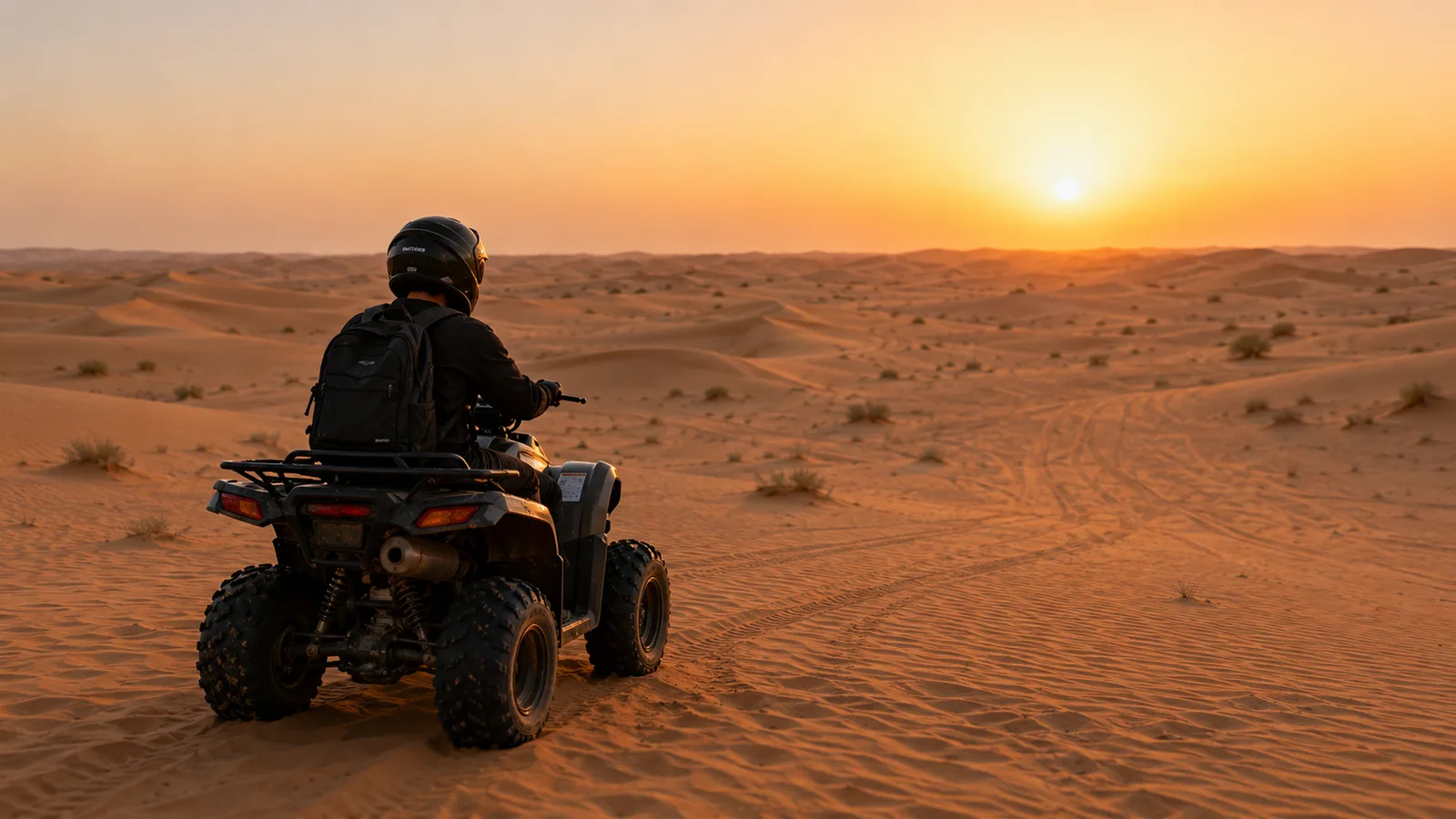
Riding an All terrain vehicle (ATV) or quad bike in the desert is another popular activity, but it still carries moderate cardiovascular demand. Unlike dune bashing, quad biking involves active rider control, which increases physical engagement and balance requirements.
Operating an ATV in the desert requires constant steering corrections due to shifting sand dunes and uneven terrain. This leads to sustained muscular activity and increased heart rate.
For individuals with stable and well managed heart conditions, light quad biking on flat terrain under supervision may be possible, but only after medical clearance. However, aggressive dune riding or long duration rides are not recommended. The key risk factor is the combination of physical exertion and environmental heat, which can trigger fatigue and elevate cardiac stress.
What Happens in a Medical Emergency During a Desert Safari?
Dubai has one of the most advanced emergency response systems in the world. If a cardiac emergency occurs during a desert safari, Search and rescue teams are deployed rapidly, often coordinated through the Dubai Police Force.
Rescue operations in the desert typically include helicopters, off road ambulances, and trained paramedics. Many safari vehicles and camps are equipped with an Automated external defibrillator, which is essential for stabilizing life threatening cardiac arrhythmias.
However, response time can still vary depending on the depth of the desert location. Remote areas of the Arabian Desert may take longer to access compared to urban zones.
This is why prevention is always prioritized over emergency response. Tour operators play a critical role in screening guests and advising against high risk participation.
What Are the Safest Desert Safari Activities for Heart Patients?
While high intensity rides may not be suitable, the Dubai desert still offers multiple low risk experiences that do not significantly elevate heart rate or blood pressure.
Gentle desert drives on flat terrain provide a controlled way to experience the landscape without sudden motion. Cultural experiences such as camel viewing, traditional camp visits, and sunset photography sessions are generally safe for most individuals with stable heart conditions.
These activities minimize exposure to G force and avoid the adrenaline spikes associated with extreme sports. The goal is to experience the desert environment without triggering cardiovascular stress. A medically cautious approach ensures that visitors with cardiovascular disease can still enjoy the aesthetic and cultural value of the desert without engaging in physical extremes.
What Role Does Adrenaline Play in Heart Risk During Safari Activities?
Adrenaline is a natural hormone released during excitement, fear, or physical exertion. During desert safaris, adrenaline levels can rise sharply due to speed, terrain unpredictability, and environmental stimulation. In healthy individuals, this response is temporary and beneficial. However, in people with cardiovascular disease, excessive adrenaline can increase heart workload and reduce coronary efficiency.
This is particularly relevant in dune bashing, where sudden drops and sharp turns simulate unpredictable motion. The body reacts as if it is under threat, which intensifies cardiovascular output. Understanding this mechanism helps explain why medical professionals emphasize caution even when a patient feels physically capable
What Safety Measures Do Tour Operators Use for Heart Patients?
A responsible tour operator plays a crucial role in reducing risk for visitors with medical conditions. Before participation, many operators now include health declarations that identify individuals with heart related concerns.
Modern desert safari companies may also adjust itineraries, replacing high intensity segments with mild alternatives. Vehicles used in safer tours are often driven at reduced speeds with smoother navigation to avoid excessive G force exposure.
Some premium operators also maintain communication systems such as GPS tracking and emergency coordination links with medical response teams. This ensures rapid intervention if symptoms appear during the tour.
Should Heart Patients Completely Avoid Dubai Desert Safaris?
Complete avoidance is not always necessary. The decision depends on the severity and stability of the condition. Individuals with well managed cardiovascular disease may still participate in carefully selected activities.
However, high risk components such as dune bashing and intense quad biking should generally be avoided unless explicitly cleared by a cardiologist. The safest approach is customization. A desert safari can be designed as a low impact experience focused on scenery, culture, and relaxation rather than adrenaline based adventure.
Conclusion
From a medical standpoint, the combination of heat, motion, and adrenaline in the desert creates a variable risk environment for heart patients. Activities involving All terrain vehicle riding and high speed dune driving are the most concerning due to their impact on heart rate and blood pressure.
At the same time, the desert is not universally dangerous. With proper planning, many visitors with stable conditions can safely experience its beauty without engaging in physically demanding activities. The key principle is controlled exposure, medical awareness, and responsible tour selection.